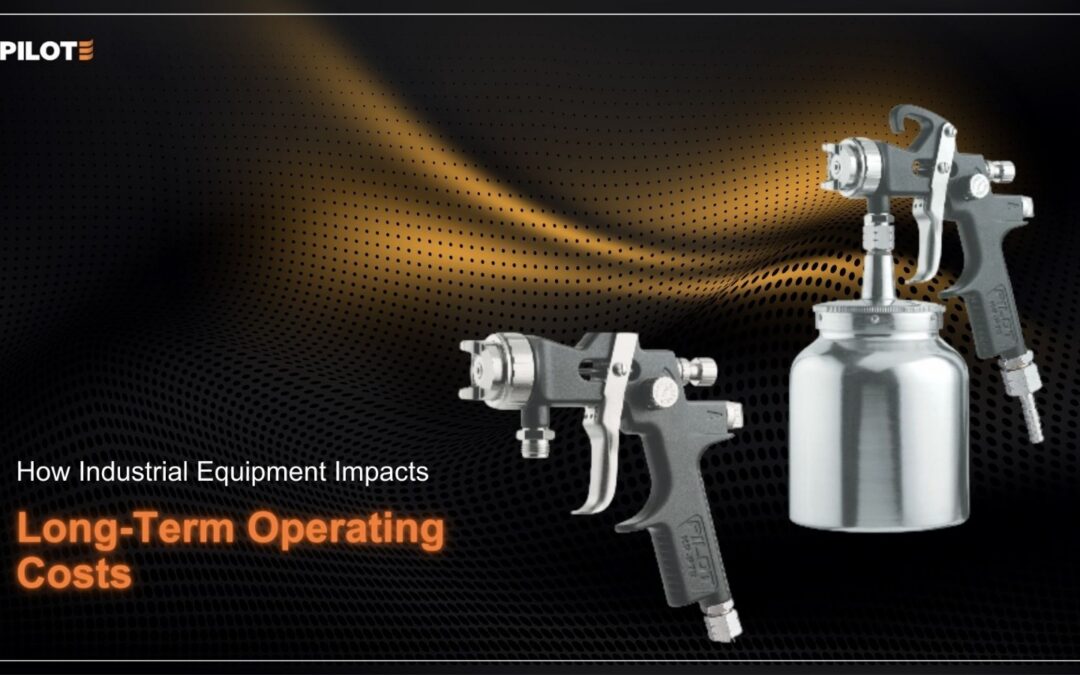
When purchasing industrial equipment, it’s tempting to focus primarily on the price tag. But here’s the reality: long-term operating costs are where the real financial impact lies. From fuel expenses to repairs, efficiency to depreciation, every piece of equipment you buy contributes to your bottom line over time.
Understanding Total Cost of Ownership (TCO)
Total Cost of Ownership (TCO) is an important concept when considering equipment investments. TCO accounts for all costs associated with owning and operating equipment, not just the purchase price. While the upfront cost might be an important consideration, it’s crucial to also factor in energy use, maintenance, operator costs, and eventual resale value. By calculating TCO, businesses can make more informed decisions that prevent unexpected costs from piling up in the future.
Key Cost Drivers Across the Equipment Lifecycle
- Depreciation and Value Retention
The moment you purchase equipment, it begins to lose value. Depreciation affects the equipment’s resale price and overall value retention. High-quality machinery typically depreciates more slowly and retains its value longer, which is why it’s essential to consider long-term value rather than just the purchase cost. - Energy/Fuel Costs
For machinery that relies on fuel or electricity, energy costs are a significant factor in operating expenses. More efficient machines use less fuel or energy to accomplish the same tasks, leading to lower monthly operating costs. Energy-efficient equipment can significantly reduce operational expenditures. - Maintenance, Repairs, and Downtime
Routine maintenance, repairs, and unexpected breakdowns can quickly escalate costs. Investing in reliable, high-quality equipment often means fewer repairs and less downtime, keeping operations running smoothly and reducing the costs associated with unscheduled maintenance. - Operator Costs
Every machine requires a certain level of operator training and involvement. Equipment that’s easier to use, with user-friendly features, can reduce labor costs and minimize human error. Additionally, investing in machines that are safer and require less supervision can further drive down operational costs.
Quality Matters: Premium Equipment, Lower Operating Costs
It’s common to think that cheaper equipment will save money, but in many cases, the opposite is true. While the initial investment in high-quality machinery may be more expensive, it typically offers long-term cost savings through increased reliability, fewer repairs, and better energy efficiency. Premium equipment is designed to last longer and perform more efficiently, meaning you’ll spend less on repairs, downtime, and wasted resources over the equipment’s lifespan.
Conclusion
The cost of industrial equipment goes far beyond the initial purchase price. By considering factors such as energy efficiency, maintenance costs, depreciation, and resale value, businesses can make smarter investment decisions that save money over the long run. Choosing high-quality, durable equipment is an investment in operational efficiency and cost savings, and it’s one that pays dividends down the line.
Recent Comments